The PLC Speaks, the ERP Does Not Hear: The Silence Between Layers


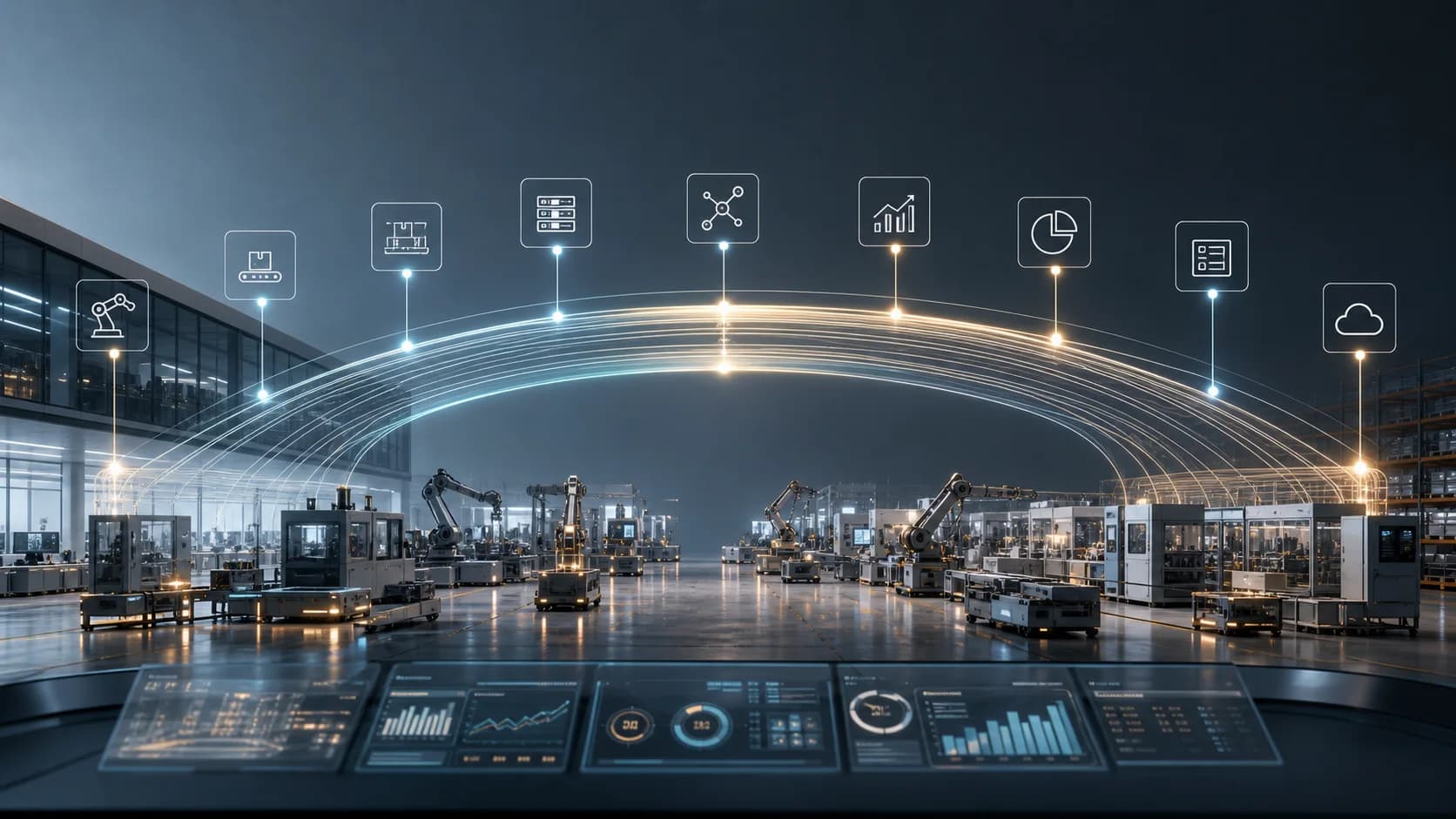
The field layer produces events; enterprise software often hears them late, incomplete, or without context. What delays operational decisions is not the absence of data, but the absence of a decision point.
When a production line stops, the PLC knows immediately. When a sensor crosses a threshold, a station completes a cycle, a pallet becomes ready, or a quality result is produced, the field layer reacts within milliseconds. Enterprise software, however, often sees the same event later, with less detail, or only as a record.
The delay in operations is rarely caused by the complete absence of data. The data exists. In many plants, the field produces more signals than the organization can reasonably use. The real issue is that those signals are moved upward before they are turned into decision context. The PLC speaks, while the ERP often understands what happened only after a transaction, form, or manual update has been completed.
An event on the floor becomes a record upstairs
For the PLC, an event is clear. A motor started. A guard closed. A conveyor stopped. A package left the station. For the ERP, the same event is not enough on its own. Which work order is affected? Which customer order may be delayed? Which lot is involved? What changes for inventory, shipment, or quality planning?
When those questions remain unanswered, the field event stays as a technical data point in the enterprise layer. An operator adds a note, a shift report is completed, or an intermediate system transfers data in batches. The decision is not made when the event happens; it is made later, when the meaning of the event is finally reconstructed.
That is why a data disconnect is not just an integration problem. It is an operational delay problem that forces planning, maintenance, quality, production, and logistics teams to look at the same reality at different times.
The value of middleware is not translating data, but turning a field event into enterprise decision context.
Data delay becomes decision delay
Consider a line stoppage. The PLC detects the stoppage instantly. The alarm appears on the screen. The technical team responds. But the effect of that stoppage on the production plan, material requirements, shift performance, or shipment commitment may only become visible in the enterprise system later.
The same applies to quality. A vision system detects a nonconforming product, but if that detection is not tied to a batch, supplier input, or customer order, it remains a local rejection signal. Prevention does not start, because the decision layer cannot see the context around the event.
Inventory movements follow a similar pattern. A pallet is completed, weighed, or labelled on the floor. If the ERP hears this late, planning still makes decisions against an outdated inventory picture. In a high-volume operation, this seemingly short gap between physical reality and enterprise record returns as wrong priorities, unnecessary waiting, and manual correction.
Why the translator metaphor is incomplete
Middleware is often described as a translator between systems. The analogy is partly true. Protocols differ. A PLC tag structure and an ERP object model do not speak the same language. Technical conversion between OPC UA, Modbus, MQTT, REST, or database connections is required.
But for a modern operation, that is not enough. A translator carries the words. A decision point determines what the sentence means, when it matters, and which action should be produced. The real value of the layer between the floor and enterprise software appears exactly there.

For example, a conveyor stoppage does not always carry the same importance. If it affects a product allocated to a critical shipment, it should be handled one way. If it occurs inside a planned maintenance window, it should be handled differently. The same signal produces a different decision in a different context. Middleware that cannot make that distinction only moves data. A layer that can make it manages the operation.
What middleware does as a decision point
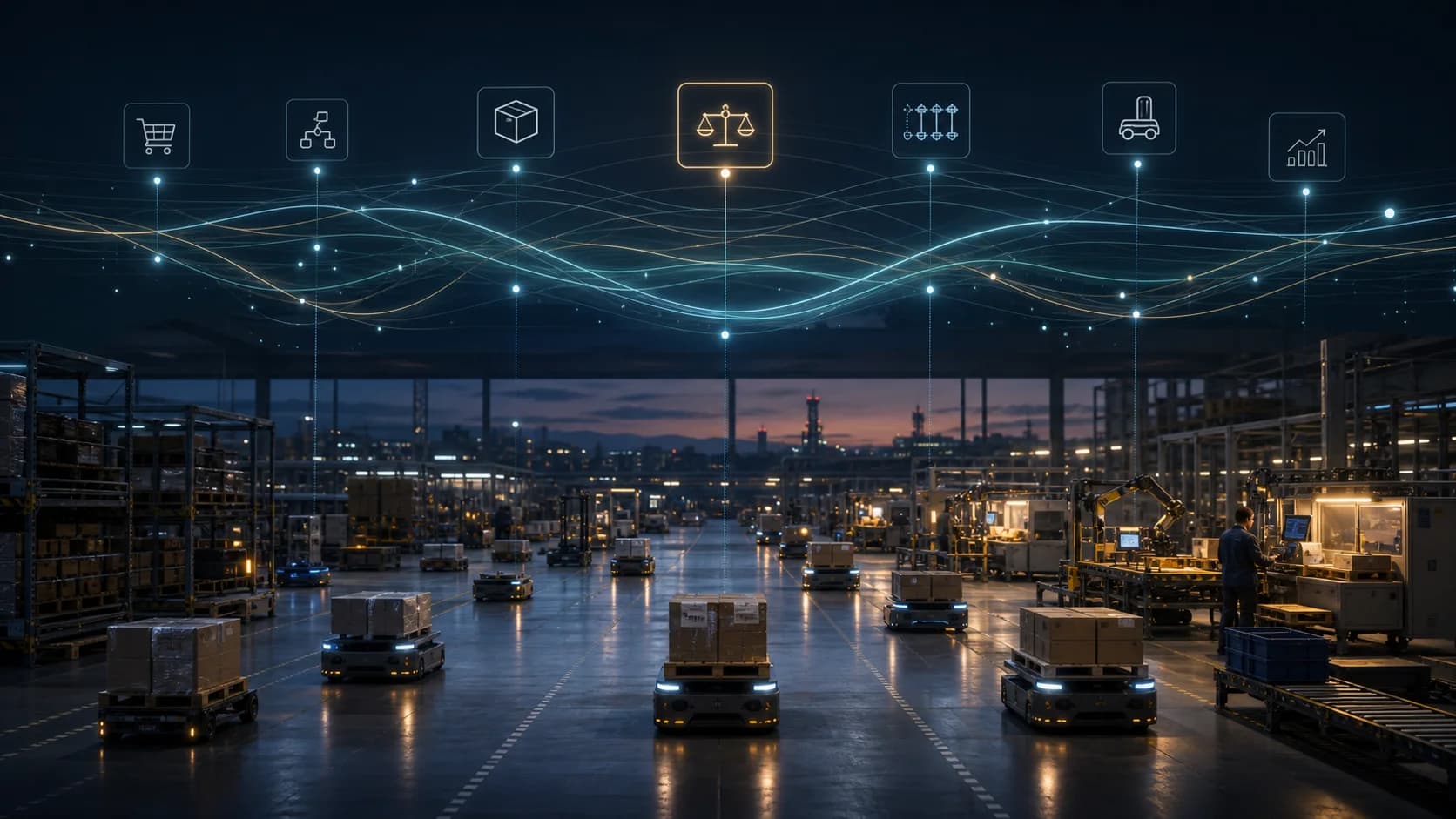
Middleware designed as a decision point first enriches the event coming from the floor. It answers which machine, line, work order, product, lot, location, and priority are involved. Then it evaluates that information against business rules.
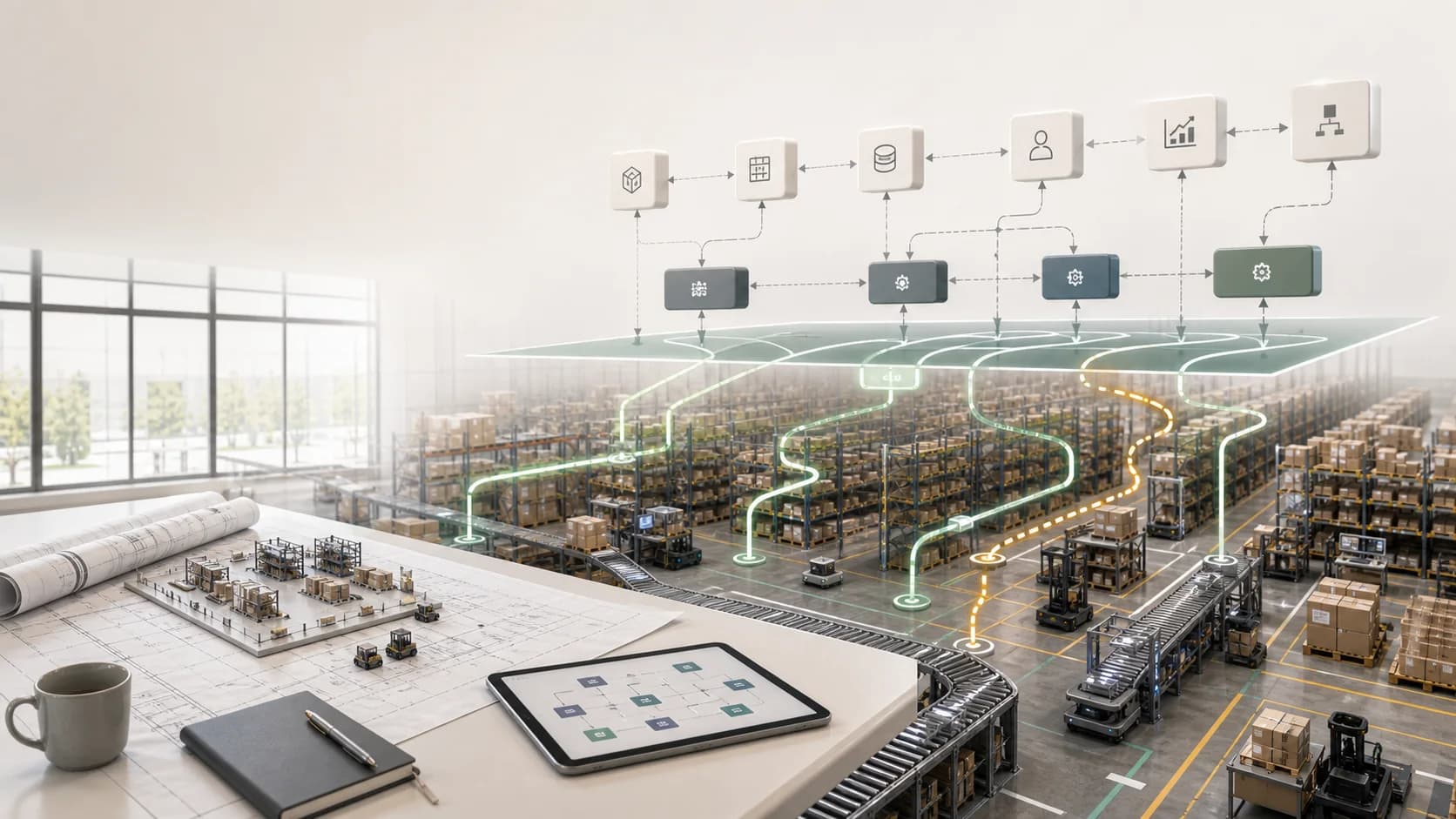
The result is not a single integration message, but an action package. Inventory may be updated in the ERP, a work order status may change in the MES, a maintenance ticket may be opened, a quality task may be assigned, or the WES layer may resequence the flow on the floor.
This changes the role of integration. The field no longer merely reports upward. The integration layer becomes a control layer that produces decisions against the current state of the operation, records those decisions, and distributes consistent actions across systems.
The PLC is fast, the ERP is contextual
The strength of the PLC is speed and reliability. It controls equipment deterministically. The strength of the ERP is enterprise context. It holds orders, inventory, cost, customer, supplier, and planning information. The operation does not need to choose one world over the other; it needs both worlds to meet inside the same decision at the right moment.
That meeting is not achieved by wiring systems directly together. It is neither scalable nor meaningful for the ERP to listen to every raw field signal. The PLC cannot be expected to interpret enterprise priorities by itself. The layer in between must turn speed into context, and context into executable action.
Reliability is part of the decision architecture
When middleware becomes a decision point, it does more than run business rules. It also guarantees that events are carried reliably. The same event must not be processed twice. Data must not disappear when a connection drops. Retries must be traceable. Every decision must leave an auditable record.
For that reason, industrial integration architecture is not simply about connecting APIs. Queuing, idempotency, timestamps, source validation, versioning, and error handling are part of operational continuity. The silence between the floor and ERP often exists even when a technical connection is present, because these reliability principles were never designed into the architecture.
Why a vendor-agnostic approach matters
There is rarely one manufacturer, one protocol, or one software stack on the floor. PLCs, robots, cameras, scales, labelling systems, WMS, MES, and ERP platforms are introduced at different times for different needs. This diversity is natural and unavoidable.
When the decision layer is tightly coupled to a specific device brand or enterprise platform, the operation becomes fragile as it grows. A vendor-agnostic middleware approach keeps each system in its proper role. Field equipment produces events, enterprise software provides context, and middleware carries the decision logic in between.
Conclusion
It is not enough for the PLC to speak. It is not enough for the ERP to hear. Operational value appears when a field event meets the right context and turns into a timely decision.
That is why middleware should not be seen only as an integration utility. When designed well, middleware is the decision point that fills the silence between the field and enterprise software. It moves data, but more importantly, it determines what the data means. It replaces delayed records with timely action.