Is PPE Compliance a Rule or a Culture?


PPE compliance monitoring is not only a violation mechanism. When designed correctly, it generates behavior data that becomes a tool for training, prevention, and safety culture over time.
PPE compliance may look like a simple rule at first. Wear the helmet, put on the vest, use the glasses, do not enter the right zone without gloves. The rules are clear; if there is a violation, an alert is produced. But on the real floor, the subject is not that linear. Human behavior, shift rhythm, area habits, equipment access, and production pressure all operate at the same time.
For that reason, personal protective equipment monitoring has limited impact when it is designed only as a punishment mechanism. The system detects the violation, reports it, and maybe notifies a supervisor. But if the same violation repeats, concentrates in the same zone, or increases during specific shifts, the issue is no longer a single act of carelessness. There is behavior, training, and process-design data that needs to be read.
This is where the real difference begins. PPE compliance is not only a rule; when managed with the right data, it becomes a measurable signal of safety culture.
A rule violation and a behavior signal are not the same thing
A worker appearing without a helmet at a specific point is a violation. But if many helmet violations appear at the same passage throughout the day, this is no longer only a person-level issue. PPE access at the entrance may be weak, the zone boundary may not be understood, or workers may not perceive the risk class of that area correctly.
Similarly, a drop in eye protection around a specific machine may not be only a discipline problem. Glasses may fog, the task may require fine visual work, shift supervisors may apply different tolerances, or spare equipment may not be available at the station. If detection data cannot make this distinction, the system only produces alarms. When it starts making the distinction, it becomes a real learning tool for management.
The value of PPE monitoring is not limited to showing who violated a rule; it creates real value when it starts showing which behavior pattern produced the violation.
What does AI vision change?
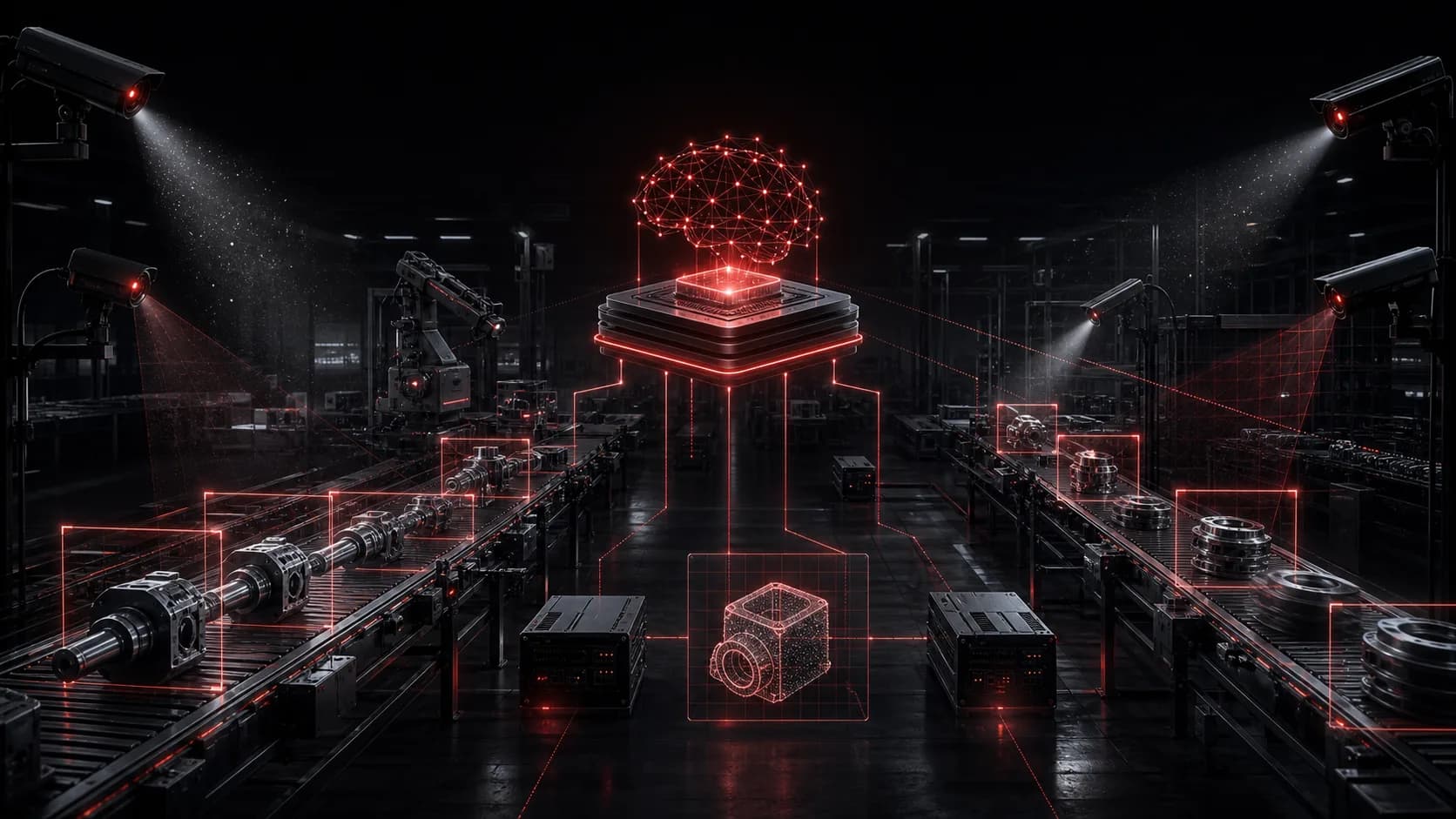
Manual inspection captures specific moments. A floor walk is performed, observations are made, notes are taken. This method is still valuable, but it is not continuous. An AI vision layer turns compliance into a continuous event stream across the areas covered by cameras. Helmets, vests, glasses, masks, gloves, and safety shoes can be matched with zone-based rules.
The critical point is not only detection accuracy. Accuracy matters, of course; false positives damage trust on the floor. But operational value appears when detections are read together with time, zone, shift, team, and task context. The system moves beyond saying “there is non-compliance” and answers where, when, under which condition, and at what density it repeats.
This answer moves PPE monitoring beyond a checklist. It turns safety behavior into a data layer.
What happens if it remains a punishment mechanism?
If a PPE system is built only around violation and punishment, workers develop a defensive reflex. The camera is not perceived as a support tool, but as an authority that watches continuously. Instead of strengthening safety culture, this perception can increase attempts to work around the system.
A punishment-focused approach also sees root cause poorly. It returns to the person without understanding why a violation repeats. Sometimes the cause is missing training, sometimes equipment quality, sometimes area design, and sometimes the rhythm of the work. This is why the data must serve learning, not only discipline.
In a well-designed system, violation data is not treated only as individual records targeting people, but as a risk map of the operation. Which zones lose compliance, at what hours violations increase, which PPE type repeats, and how behavior changes after training become measurable questions.

How does behavior data become a training tool?
Training in many organizations is periodic. Orientation is delivered, annual training is completed, signatures are collected. But floor behavior changes continuously. New workers arrive, workload increases, machine layout changes, and production pressure rises. Training content therefore needs to be updated according to live data.
PPE detection data becomes the basis of that update. If eye protection violations increase during a specific shift, the training stops being a generic “wear your glasses” message. It is explained through the real scenarios of that shift. If vest compliance drops at a specific passage, a short field briefing may be more useful than classroom training. If helmet violations concentrate among new employees, the orientation content can be redesigned.
Training then stops being an abstract procedure. It becomes an improvement mechanism that directly responds to observed behavior on the floor.
Prevention starts by reading repeated patterns
To prevent a safety event before it happens, seeing the instant violation is not enough. The repeated pattern must be read. Non-compliance around the same zone, equipment, shift, or task type shows where risk is accumulating.
The AI vision layer makes this pattern visible over time. If the risk profile of an area changes, the system can show it through event density. If the violation rate drops after training, improvement can be measured. If glove compliance weakens after a new workstation goes live, the process design can be revisited. This moves safety management away from retrospective reporting and closer to preventive action planning.
Culture is shaped by how measured behavior is handled
Safety culture is not built by slogans alone. It is shaped by how workers perceive the purpose of the system. If technology is positioned only as an eye that catches mistakes, culture becomes defensive. If technology is used as a tool that makes risks visible, personalizes training, and makes the floor safer, culture becomes stronger.
That is why the design principle for PPE compliance is clear. Data should not only serve the question “who did it,” but also “why does it repeat here.” Privacy, role-based access, event retention policy, and reporting language must support this approach. When workers see that data is used for prevention and improvement rather than punishment alone, acceptance increases.
Where does the institutional value appear?
A properly designed PPE vision system creates value on three levels. The first level is real-time alerting: when missing equipment appears in a risky area, an event is produced. The second level is operational analysis: it shows which zone, shift, and equipment type repeats. The third level is cultural learning: training, floor design, and process rules are updated according to the data.
Without the third level, the system is only an inspection tool. With the third level, it becomes a decision layer for safety management. The institution no longer only counts violations; it measures behavior change, training impact, and the result of preventive actions.
Conclusion: PPE compliance starts as a rule, but lasts as culture
PPE compliance is certainly a rule. Without rules, there is no safety standard. But when it remains only a rule, it struggles to change behavior permanently. Permanence is created when floor data is read correctly and connected to training, prevention, and process improvement loops.
An AI vision system is therefore not only a camera layer that detects violations. When built with the right architecture, it becomes a behavior data layer that measures and guides the development of safety culture. Producing penalties is easy. The real value is understanding why the same violation repeats and building a floor where it is less likely to repeat again.