
A standard WMS is often patched after implementation under the name of “customization.” Real floor flow needs a vendor-agnostic, institution-specific architecture designed correctly from the beginning.
Packaged WMS projects often begin with the wrong assumption: that a warehouse operation is close enough to the processes already defined inside the product. Implementation starts, basic inventory and location screens go live, handheld workflows are configured, and the project appears to be moving. The real break point appears when the software meets the actual decision moments on the floor.
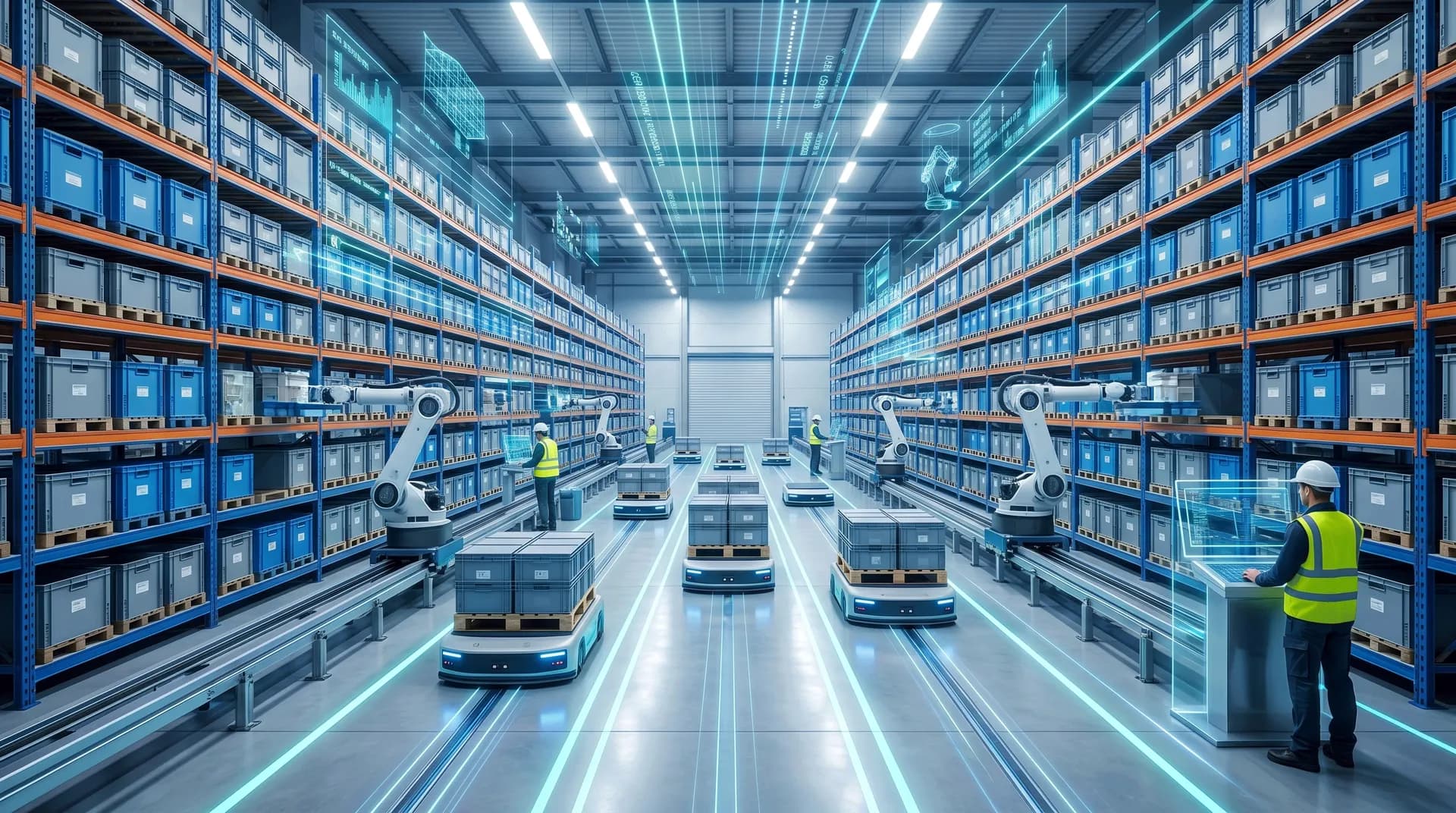
On the floor, operations are not just “receiving,” “picking,” and “dispatch.” ERP constraints, production rhythm, shift patterns, pallet types, forklift routes, AGV/AMR behavior, barcode and RFID exceptions, quality holds, and customer-specific shipping rules all run at the same time. A standard product usually tries to absorb this complexity through configuration screens. When that is not enough, the project enters the familiar phase called customization.
Customization often means patching, not architecture
In enterprise software, customization sounds positive. It suggests adapting to need, flexing around the site, and supporting the operation. In packaged WMS implementations, however, customization often means forcing a field reality into a product architecture that did not account for it at the beginning.
At first, these changes look harmless. A field is added to a screen, a location rule is tied to a special condition, an integration file is parsed in a different format, or a separate flow is opened for one station. But each addition moves the operation a little further away from the product’s core flow. Over time, critical decisions begin to live outside the WMS itself: in side services, scripts, manual checklists, and person-dependent workarounds.
What stalls on the floor is often not the WMS screen; it is the decision architecture behind it.
Why does a packaged WMS lose speed on the floor?
The core reason is that many packaged systems treat warehouse management as a transaction and record-keeping problem. Modern intralogistics is no longer only about knowing which item is in which location. The real question is which task should be assigned to which resource, in what sequence, under which live constraints.
When this decision layer is limited or closed, the system struggles in three areas. First, business rules are trapped inside predefined product logic. Second, integration can only expand as far as the product’s supported vendor and protocol list allows. Third, as the operation changes, software behavior is managed through development requests and temporary adaptations rather than through a controlled operational model.
1. A standard process does not represent the real operation
Every warehouse receives, stores, picks, and ships. No two facilities do this with the same priorities. In one site, the production line must never stop. In another, lot and expiry accuracy are non-negotiable. In another, the same SKU may follow different rules depending on customer, quality status, or storage zone. When a packaged WMS forces these differences into one generic process tree, exceptions multiply and users begin creating decisions around the system.
2. Integration gets trapped inside the supported product list
The floor does not contain only ERP and handheld terminals. PLC-driven conveyors, robots, scales, camera systems, RFID gates, label printers, automated storage systems, AGV/AMR fleets, and institution-specific databases all become part of the same flow. When a packaged product moves outside its supported integration types, middleware, file transfers, and special connectors begin to appear. This makes it harder for the WMS to act as the central decision layer of the operation.

3. Change management becomes dependent on the product roadmap
Operations do not stay still. A new customer goes live, the production plan changes, new equipment is installed, another ERP module is introduced, or an unexpected bottleneck appears on the floor. If the software architecture cannot absorb this through its own rule engine, integration layer, and task orchestration model, every change becomes dependent on the vendor’s development calendar. At that point, the WMS stops accelerating the operation and starts trying to keep up with it.
Why PoC success does not always survive go-live
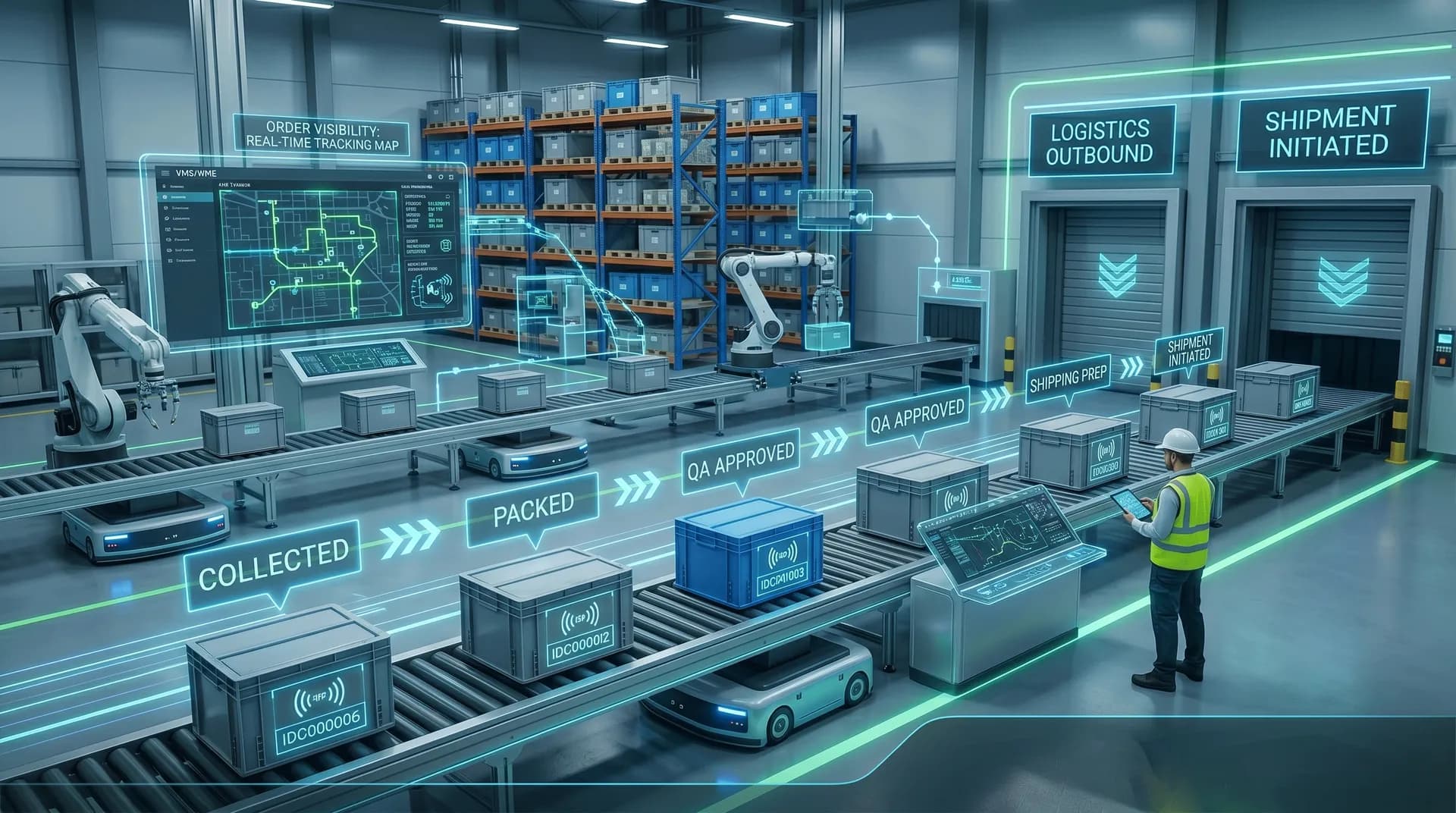
Packaged WMS vendors often demonstrate the project through a controlled pilot flow. A limited product group, a limited number of users, clean master data, and prepared scenarios are useful for showing the basic capabilities of the product. But live operation is a different discipline. A delayed truck, a missing barcode, a pending quality approval, a full buffer zone, an uncharged robot, and a late ERP order update can all appear at the same time.
This is where the real boundary of the product becomes visible. The system may execute individual transactions; but if it cannot resolve conflicting priorities inside one decision model, users return to manual coordination. What a PoC usually hides is the density of decisions on the floor. A successful pilot therefore does not automatically become sustainable performance after go-live unless the architecture is right.
What does vendor-agnostic architecture do differently?
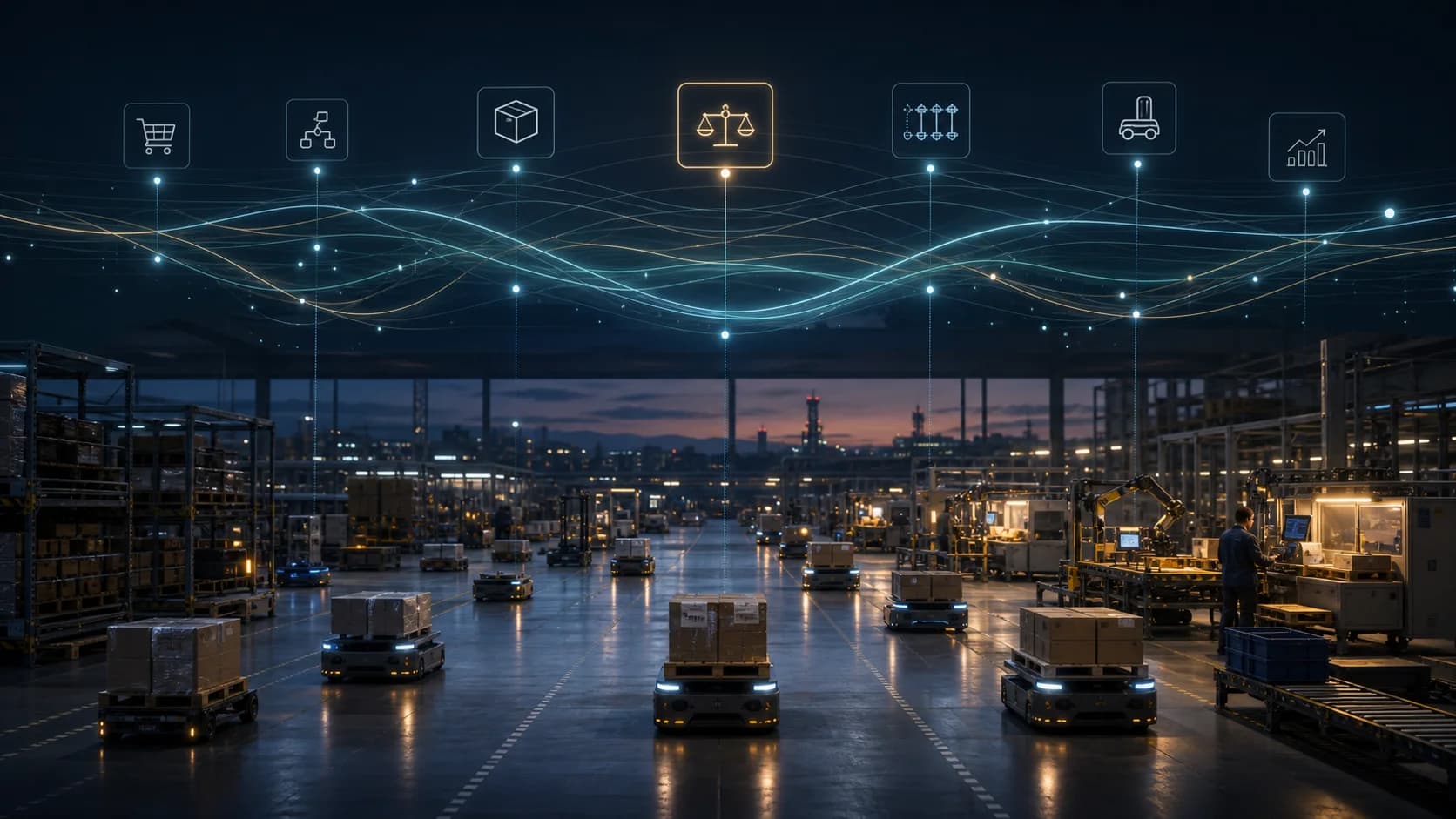
A vendor-agnostic approach does not design the warehouse around a fixed list of supported systems. It starts from the events, decisions, and data flows the operation needs. The AGV brand, PLC manufacturer, ERP system, or barcode reader model is not the center of the architecture. The center is the decision layer that understands field signals and routes work to the right resource.
In this model, the WMS stops being a closed product on its own. It becomes a backbone that combines WES logic, floor tasks, integration services, and operational rules in one architecture. Orders, stock, and location data are not only stored as records; they are evaluated together with robot traffic, station capacity, quality status, shift structure, and ERP priorities.
Institution-specific architecture solves the problem from the start
An institution-specific architecture begins with field analysis, not a product checklist. The facility’s physical flow, data model, equipment inventory, user roles, business priorities, and exception scenarios are mapped together. Software is then built on top of that reality. Instead of bending the operation around a standard product, the project creates a software backbone that carries the operation’s actual decision structure.
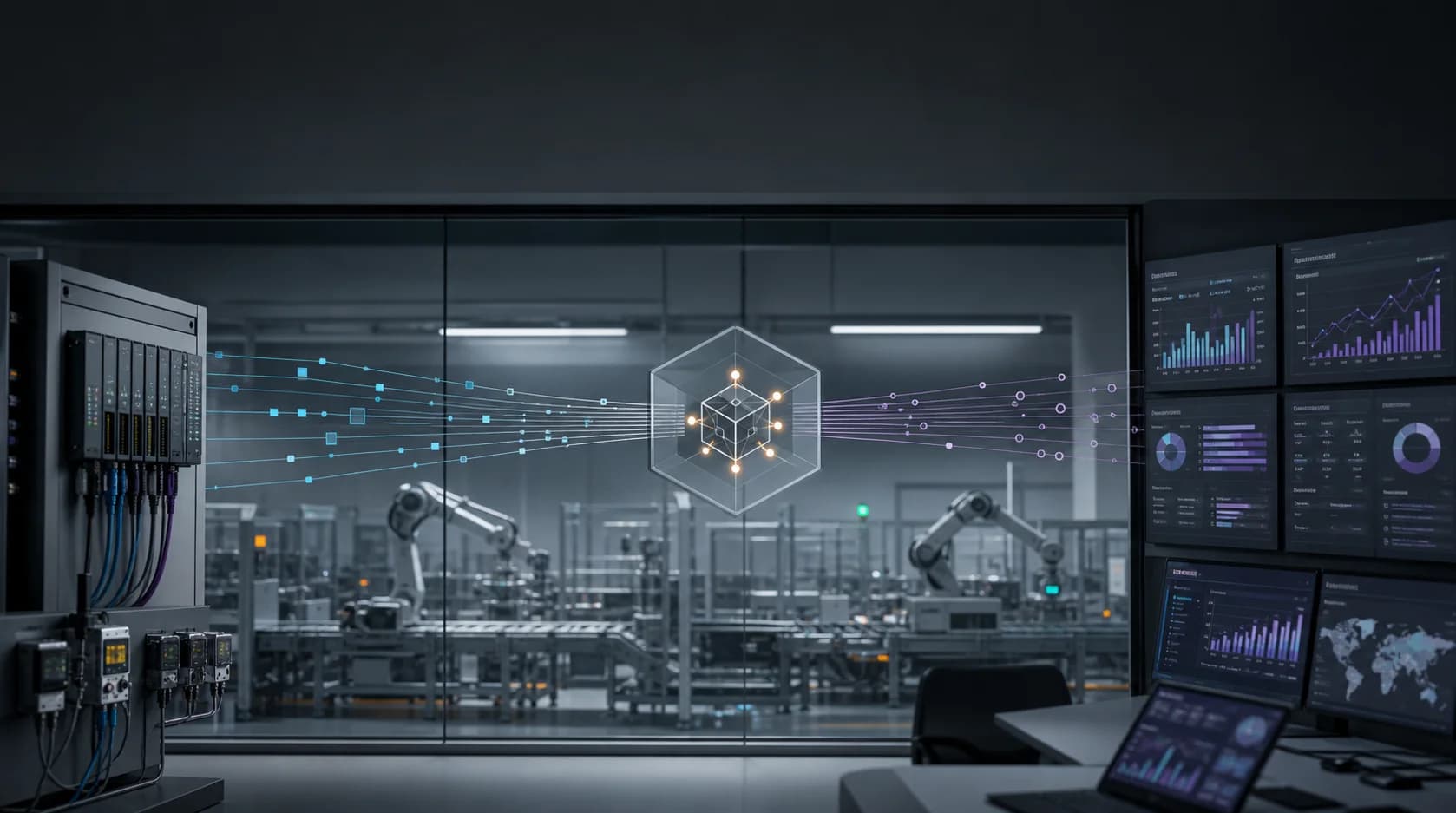
This backbone rests on three principles. First, the data model must represent the institution’s real objects: pallets, totes, lots, locations, stations, equipment, tasks, and events need the right relationships. Second, the integration layer must be vendor-agnostic: ERP, MES, PLC, robot, camera, RFID, and printer systems should connect through the same event logic. Third, decision rules must be manageable as the floor changes: priority, capacity, routing, holds, quality, and task assignment belong in the core architecture.
From patch culture to decision architecture
In packaged WMS projects, the most expensive cost is often not the license or the first implementation fee. The real cost is the adaptation layer that grows over years and reduces operational flexibility. Every patch makes the next change harder. Every temporary integration creates a new dependency. Every manual control gives a decision back to the user that software should have owned.
A vendor-agnostic, institution-specific architecture prevents that cost from the start. It gathers different floor devices and enterprise software layers into one decision backbone. When the operation grows, a new module can be added. When equipment changes, the connector changes. When a process changes, the rule is updated. The core architecture remains intact.
The hidden cost: maintenance load created by patches
Every patch solves more than the problem of the day; it also creates a new behavior that must be maintained in the future. Who requested it, which exception it covers, which integration it touches, and which flow it may conflict with gradually becomes dependent on institutional memory. When teams change or the operation grows, this layer turns into technical debt that is difficult to read.
The maintenance load grows especially around integrations. A file format changes, a field name is updated in ERP, the robot fleet requires a new task type, or label printers need a different output template. Without architectural integrity, every change is tested in a separate place. This increases go-live risk and reduces the operation team’s trust in the software.
Transition approach: building a backbone without tearing out existing systems
Institution-specific architecture does not mean ignoring existing investments. In most facilities, ERP, an existing WMS, production software, automation panels, and field devices are already running. The right approach is not to replace everything at once, but to build the decision and integration backbone in a controlled way.
This backbone first clarifies data ownership: which information is mastered in ERP, which event originates on the floor, which decision belongs in the WMS/WES layer, and which output is sent to equipment. Critical flows are then activated modularly. The institution continues to extract value from existing systems while no longer being constrained by the limits of a packaged product, and change can be managed step by step.
Conclusion: WMS selection is an architecture decision, not a product decision
Warehouse management is no longer just an inventory screen, a location tree, and handheld transactions. Modern intralogistics is a field problem where software, equipment, data, people, and enterprise systems make decisions together. For that reason, WMS selection should not be treated as a purchase decision based only on a feature list.
The right approach is to build an architecture that solves today’s operational need while carrying tomorrow’s change. Instead of accepting the patched limits of a packaged product, a decision layer that understands the floor from the beginning, works independently of vendor constraints, and is designed around the institution creates less friction, faster change, and a more sustainable automation foundation.