The AGV Fleet Is Live. Why Didn't Throughput Move?


Deploying an autonomous fleet does not guarantee operational efficiency. The real difference comes from the orchestration layer above the hardware.
When a facility moves to an autonomous fleet, the expectation is clear. Faster material flow, less manual handling, a more predictable operation. The vehicles arrive, the maps are built, the charging stations are placed. A few months later, the reports often tell the same story. The efficiency curve never made the expected jump.
This does not mean the hardware fell short. AGV and AMR technology has matured. Navigation, payload capacity, and safety layers are now dependable. The problem usually appears not in the vehicles themselves, but in the layer that tells them what to do.
An autonomous vehicle completes the task it is given. Which task is produced, in what sequence, and at what moment is an entirely different decision. That decision sits outside the scope of the hardware.
Where the hardware ends
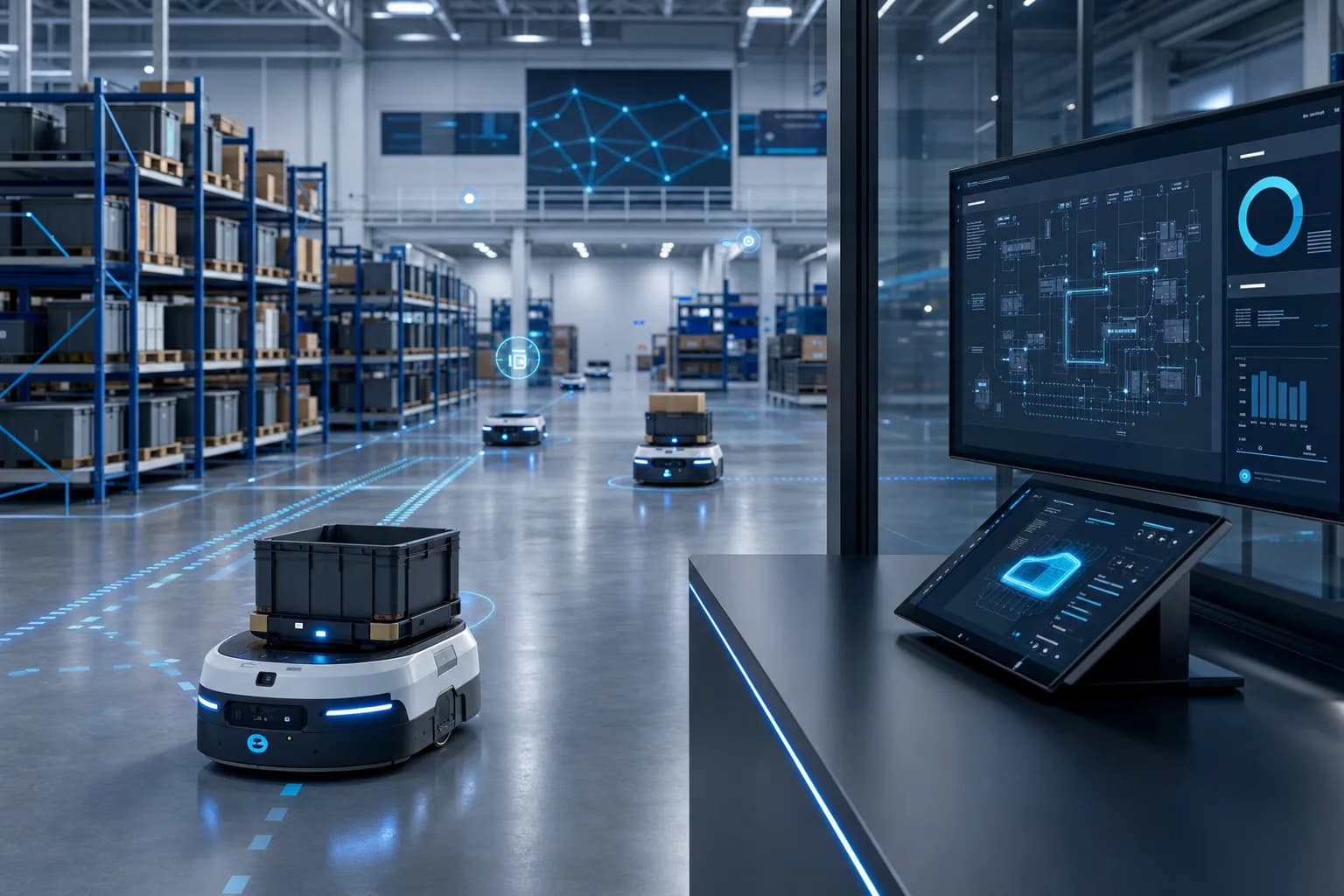
When an AMR fleet is deployed, it usually arrives with a fleet manager. This software handles vehicle traffic. It prevents collisions, assigns routes, and manages the charging cycle. It does its job well, and it is necessary.
But there is a domain the fleet manager does not see. The rest of the operation. The state of the order pool, the load on picking stations, how priorities are shifting, which order belongs in which wave. The fleet manager answers "move this vehicle to that point." It does not answer "which job should be done right now."
When this gap is left unfilled, the vehicles run flawlessly in technical terms but perform the wrong jobs in operational terms. The fleet looks busy, there is movement, yet the flow produces no added value.
An autonomous vehicle carries the task it is given. Producing that task in the right order and at the right moment is the job of the decision layer, not the hardware.
What the orchestration layer solves
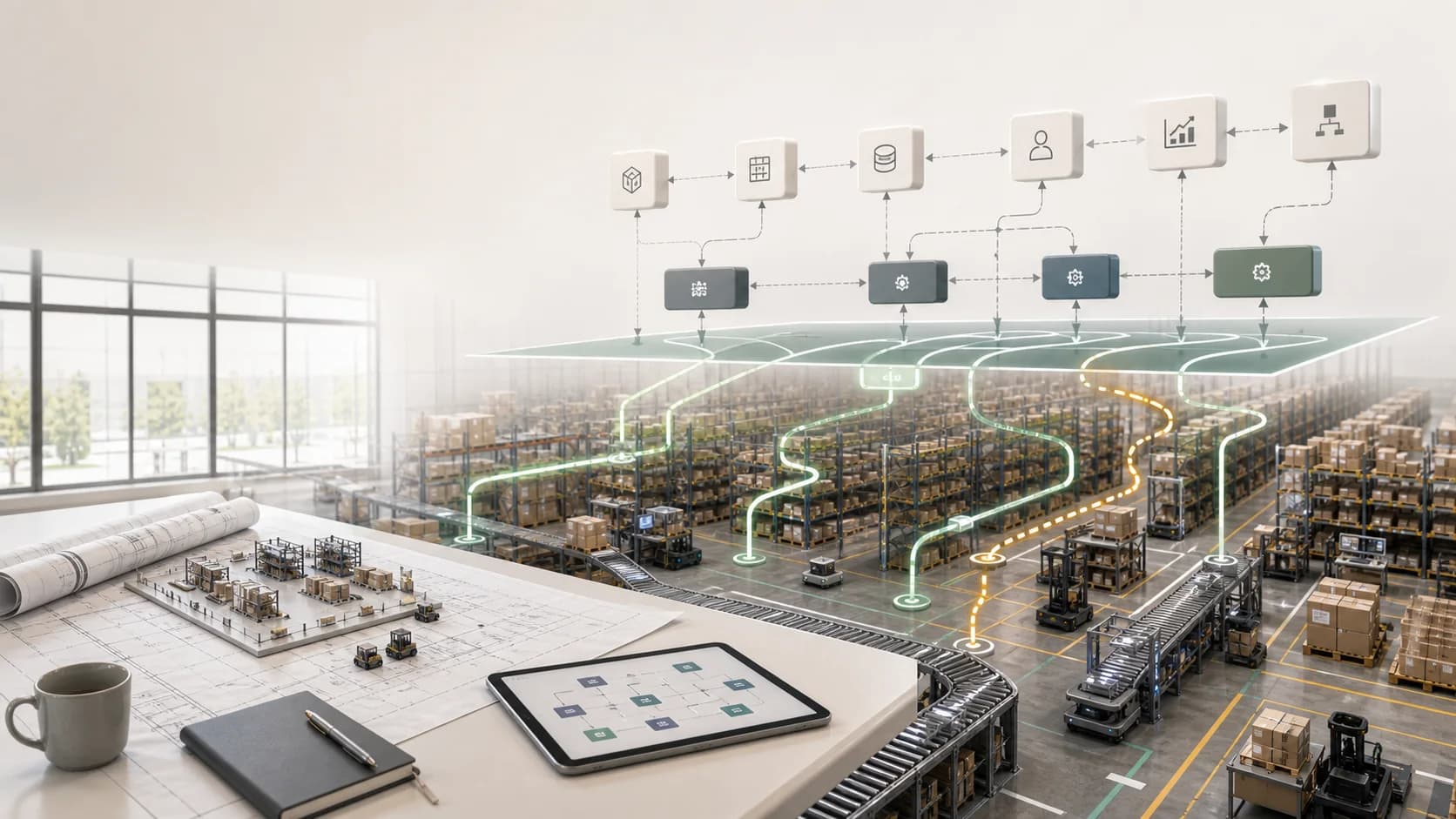
The orchestration layer is the decision mechanism that sits above the hardware. It reads the real state of the floor. It evaluates orders, capacity, bottlenecks, and priorities at the same time. Then it produces work for the fleet.
This is where the difference begins. The fleet manager manages the vehicles. The orchestration layer manages the work. Without the first, vehicles collide. Without the second, vehicles run in the wrong sequence.
Before releasing an order, this layer answers several questions at once. Can the picking station absorb this load. Is there a suitable vehicle in the fleet. Is this order cutting ahead of a more critical job already waiting. If the answers hold, the task is produced. If not, the order is queued. The decision is made within seconds and against the current state of the floor.
What the decision layer needs to see
A sound decision is only possible with sound data. For the orchestration layer to work well, it has to see beyond the floor. Demand coming from the enterprise system, priorities flowing down from the production plan, the shipping schedule, and inventory status all need to meet in the same picture.
Without that visibility, the decision layer can only react. It distributes whatever arrives in front of it. With visibility, the layer becomes anticipatory. It knows where the load is coming from before it has to distribute it, and prepares the fleet accordingly.
This is the point where an autonomous vehicle project stops being a hardware installation and becomes an integration project. The real engineering lies not in the vehicles themselves, but in building the data flow that feeds them.
Where fleet management meets the WES
The Warehouse Execution System, the WES, operates exactly at this intersection. The WES is the layer between order management and physical execution. On one side is demand coming from the enterprise system. On the other side are the vehicles, stations, and people on the floor.
The WES aligns the two in real time. It determines when to release an order, which resource to assign it to, and what sequence to follow. The fleet manager applies only the vehicle side of that decision. The WES produces the decision itself.
This is the part most often missing from an autonomous vehicle investment. The hardware is purchased, the fleet manager is activated, but no WES layer is placed in between. Order flow still arrives from the legacy system in bulk. The vehicles try to react to that bulk load. The result is an uneven operation.

A concrete scenario
Consider a distribution operation where an AMR fleet is deployed for goods-to-person picking. The vehicles carry shelf modules to the picking stations. The hardware is sound. The fleet manager handles traffic flawlessly.
Order release, however, still runs through the legacy WMS in hourly bulk batches. The moment a batch opens, dozens of orders drop onto the fleet at once. Vehicles head into the same aisles. Queues form in front of a few picking stations while others stand empty. When the batch is exhausted, the fleet waits for the next one. This time the vehicles sit idle.
Within the same hour, the fleet is both congested and idle. The average utilization rate comes out low, but the cause is not the vehicles. The cause is that work is produced against the legacy system's schedule rather than the rhythm of the floor.
When the WES layer steps in, the picture changes. Orders are released in a continuous, balanced flow instead of bulk batches. Every release decision looks at the number of idle vehicles and station load at that moment. The fleet runs under a flatter load curve with the same hardware. Utilization rises, because the vehicles did not change. The way work is produced for them did.
Why vendor-agnostic orchestration matters
Most fleet managers are tied to the manufacturer that sold the vehicle. In a single-brand fleet, this creates no problem. But operations grow and diversify over time. Different vehicle types for different jobs, often from different manufacturers, come into play.
When the orchestration layer is designed independently of the manufacturer, this diversity stops being a constraint. The decision layer sees the entire fleet as a single pool. Regardless of brand, the right vehicle is assigned to the right job. The investment is not locked to a specific supplier. It is shaped by the needs of the operation.
The return on investment lives in the architecture
In autonomous vehicle projects, the largest share of the budget goes to hardware. That is understandable. But the line item that determines the return is often the invisible software layer.
The same fleet delivers a mid-level result with a weak decision layer. With a strong orchestration layer, the same fleet produces noticeably more. The hardware is fixed. What varies is how work is distributed across that hardware.
For that reason, the first question to ask when planning an autonomous vehicle investment is not the brand or the count of the vehicles. The first question is this. Who will produce work for these vehicles, based on what, and at what speed. If the answer to that question is not clear, even the best hardware runs below its potential.
Efficiency does not rise with the number of vehicles on the floor. It rises when those vehicles do the right job at the right moment. The hardware carries that job. The orchestration layer decides what the job is. The real return on the investment appears where these two layers meet in the same architecture.