The Hidden Line Item in Automation Investment: Integration


Automation budgets are often built around hardware. Yet the real return is determined by how accurately and timely systems hear each other.
Automation investments are usually discussed through the visible line items. Robots, conveyors, cameras, PLCs, panels, sensors, AGVs, line equipment, and field installation form the core of the budget. The largest numbers in quotations appear next to hardware. Management presentations also tend to describe the investment impact through those physical assets.
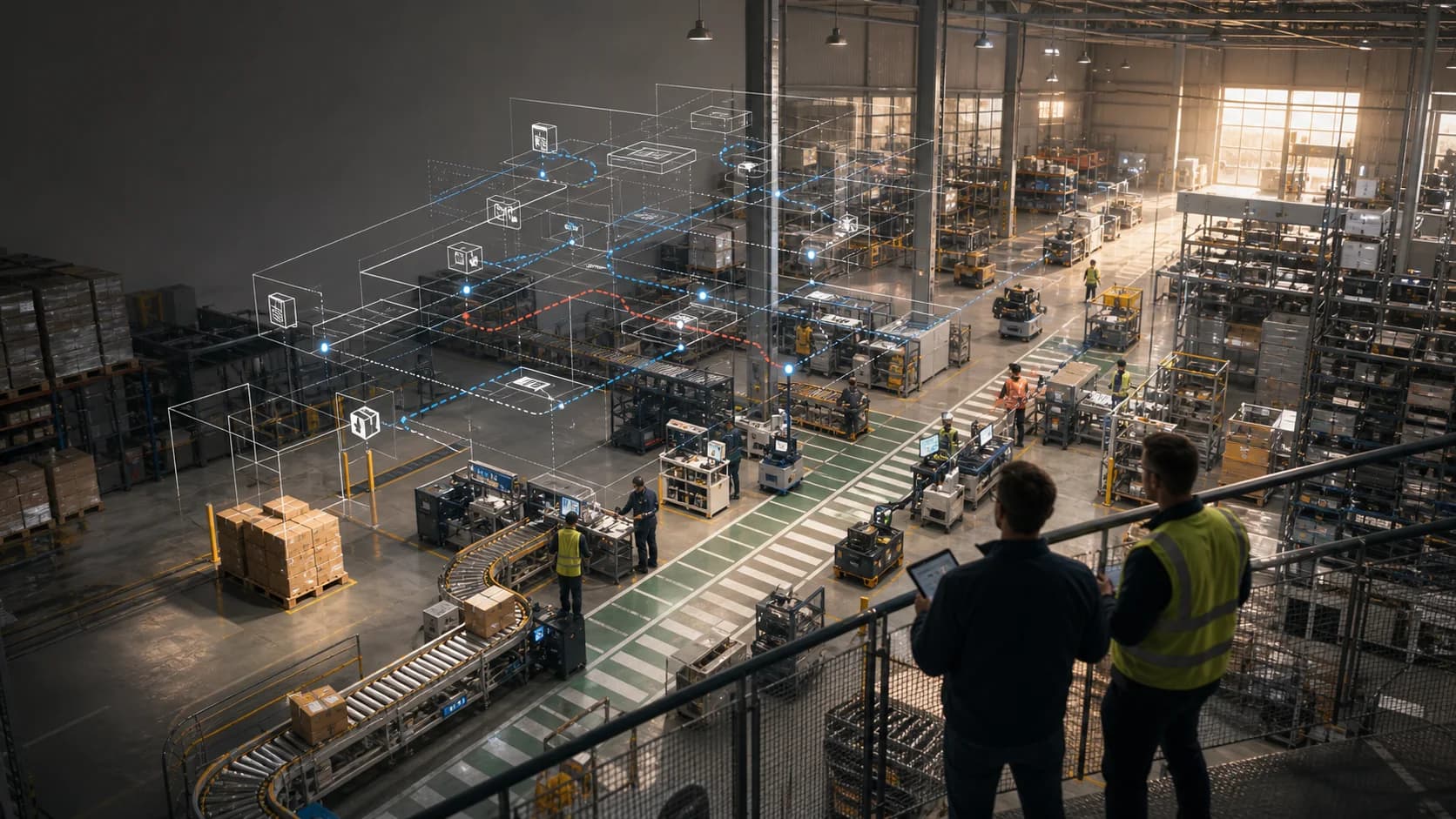
But once the project reaches the floor, the real challenge often appears not in whether the hardware works, but in whether the systems work together. The machine runs, the robot moves, the camera captures images, and the PLC produces signals. Yet the operation may still fail to produce the expected gain. The value of automation does not come from isolated equipment performance; it comes from how accurately that equipment is connected to the enterprise process.
Visible investment and working operation are not the same
Installed equipment does not mean the operation has been automated. For automation to create value in real life, orders, work orders, inventory, quality, maintenance, shipment, and field signals need to speak inside the same flow. Without that flow, hardware remains a local capability.
A vision system may identify the product correctly. But if that result is not tied to a lot, quality record, and customer order, it does not produce a decision. A robot may complete its cycle. But if the upper system does not know which work order moved forward, the plan is not updated. A conveyor line may become faster; but if the WMS or ERP does not release work at the same rhythm, total throughput remains limited.
When automation ROI is calculated only against hardware capacity, the impact of integration on decision-making stays outside the budget.
Why integration disappears from the budget
Hardware budgets are concrete. Model, quantity, capacity, brand, and delivery date are visible. Integration, however, is an engineering domain that often becomes fully visible only as the project progresses. Which system will produce which data at what time? In which format will it move? What happens when an error occurs? Where does the manual process close? In which layer should the business rule run?
When these questions are not opened early enough, the integration line looks small. Once the project starts, the real scope appears. API connections, field protocols, data cleansing, exception handling, user flows, security, logging, test scenarios, and commissioning work accumulate. A small-looking budget item becomes a large share of the timeline and risk.
That is why integration cost is often perceived as additional work discovered later. In the right view, integration is not an invisible appendix to the automation investment; it is the architectural layer that allows the investment to create value.
Where ROI calculations go wrong
The most common mistake in automation ROI is turning theoretical equipment capacity directly into operational gain. A robot's hourly cycle count, a line's transport capacity, or a camera's detection accuracy is not the total return by itself. These metrics are necessary inputs, but they do not represent the whole operation.
Real return is measured by how these capabilities change bottlenecks. If systems do not communicate and orders are released late, quality results arrive late, inventory records drift from the floor, or exceptions remain manually tracked, the hardware capacity cannot be fully used. The gain on paper turns into waiting, rework, and coordination cost on the floor.

Another reason ROI is miscalculated is that integration is treated only as the initial connection cost. In reality, integration is a living structure. New products are introduced, line layouts change, quality rules are updated, ERP processes are revised, and new equipment is added. If the architecture was not designed to carry these changes, every update creates new cost and new downtime risk.
What changes when systems speak
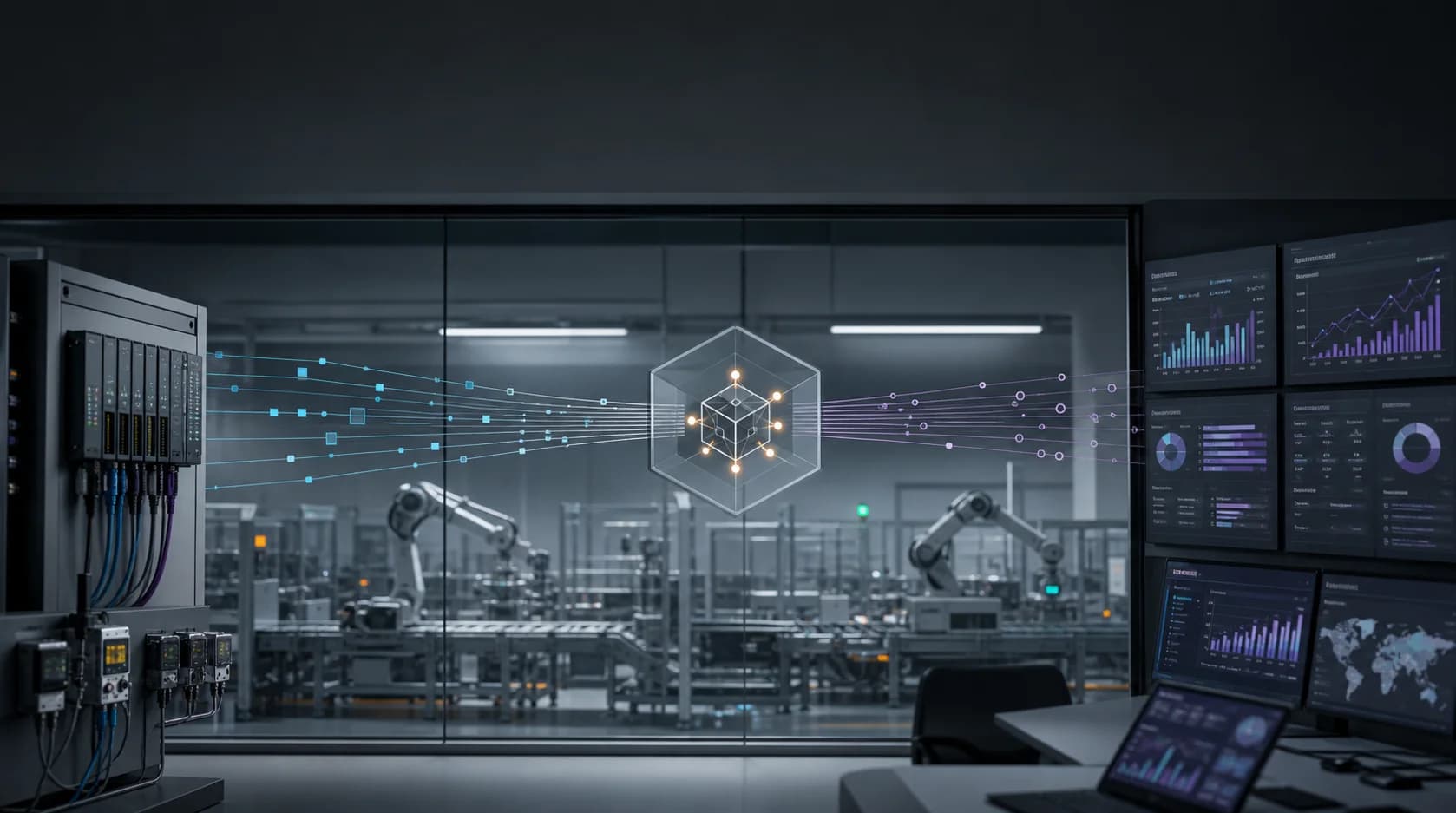
Good integration turns the system into more than a data transfer mechanism. A field event gains context. A machine stoppage becomes visible together with the work order it affects. A quality result automatically changes inventory status. When a pallet is completed, the WMS, ERP, and shipment plan are updated together. When a station becomes a bottleneck, the work flow is resequenced accordingly.
At that point, the effect of automation is not only speed. Decision time shortens, manual tracking decreases, errors are caught earlier, and the plan becomes more reliable. This is where the often-missed part of ROI lives. The gain does not come only from faster equipment; it comes from decisions that are no longer delayed.
Integration is operational, not only technical
Integration is often placed under IT. That is true, but incomplete. What integration designs is not only a system connection; it designs how the operation will decide. Which data must be real-time? Which data can be processed in batches? Which event counts as an exception? Which system is the source of truth? When is human approval required?
These decisions cannot be made well unless operations, engineering, and software teams work together. Integration based only on API documentation misses the actual flow of the floor. Integration based only on field knowledge can disrupt the discipline of enterprise records. A successful architecture brings both worlds into the same decision design.
Putting integration into the budget from day one
When planning an automation investment, integration should not be treated as a final technical step. It should be considered a business layer that must be designed from the start. When hardware is selected, the systems it will speak to, the data it will produce, the decisions it will trigger, and the future changes it must absorb should be evaluated together.
This approach makes the initial budget more realistic. The integration line may look larger at the beginning, but the total risk decreases. Connections discovered late, temporary manual workarounds, and business-rule gaps found during commissioning become visible earlier.
Conclusion
The visible face of automation investment is hardware. But the return on that investment is often determined by the integration architecture behind the hardware. When systems do not speak, the equipment works, but the operation cannot reach its full speed.
A correct ROI calculation considers not only the robot, camera, or line being purchased, but also the decision flow those assets will join. The real value of automation appears not when the machine moves, but when that movement becomes a meaningful action inside the enterprise decision system.